About
Organizations rarely fail because information does not exist. They fail when important signals are fragmented, overlooked, misunderstood, or never connected.
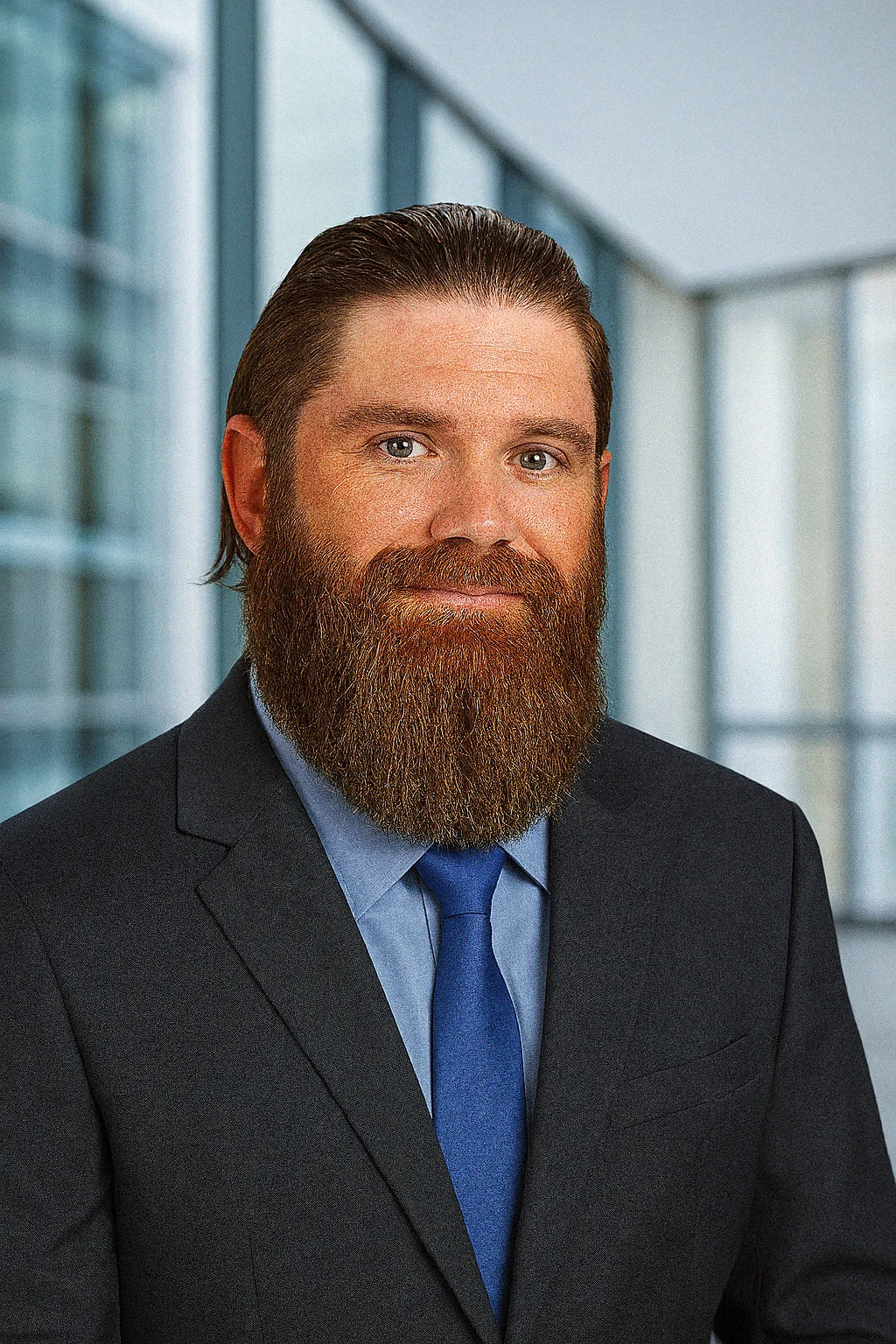
Charley Merrow is a security and safety professional, author, and creator of Vigilant Frameworks. His career has taken him through law enforcement, corrections, human resources, education, and organizational security, giving him experience across environments where people, systems, policy, communication, and risk intersect.
Charley currently serves as a Security Technician with Centerra Gold, continuing his work in an environment where security, safety, operational awareness, and organizational responsibility are closely connected.
His professional experience has shaped a broader interest in understanding why organizations sometimes fail to recognize problems that are already visible within their own systems. That interest became the foundation for Vigilant Frameworks, a body of work focused on organizational blind spots, documentation, communication, human behavior, accountability, and the signals that can be missed when information exists across disconnected people, processes, and systems.
Charley is the author of The Protector's Blind Spot and The Signal Deficit. His work combines professional experience, research, writing, and practical frameworks designed to help organizations recognize risks, connect information, and make better decisions.
At the center of his work is one question:
What happens when an organization is supposed to protect people, but the systems designed to do that are not working the way they were intended?
Books
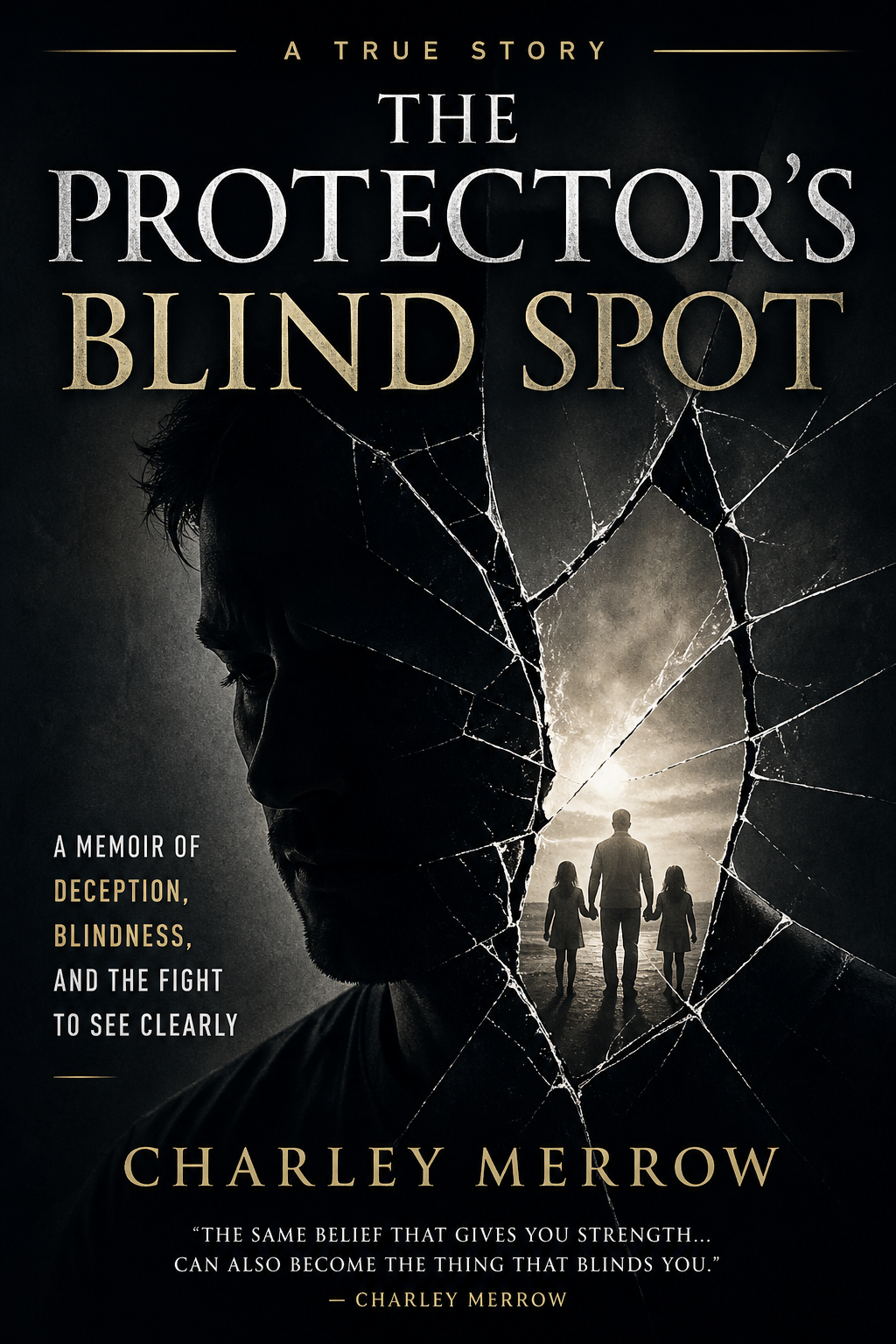
(Publication TBA) The Protector's Blind Spot: A Memoir of Deception, Blindness, and the Fight to See Clearly
Charley Merrow spent a lifetime becoming the protector. Shaped by a steady father, a devoted mother, and years in Scouting, he built an identity around one certainty: when someone needs you, you show up. No hesitation. No questions.
That identity made him a good man. It also made him the perfect target.
When the woman he married began fabricating illnesses in their daughters — subjecting them to unnecessary hospitalizations, powerful medications, and years inside a constructed medical reality — Charley believed every word. Because he had been built to believe. Because the story fit him so precisely he never thought to question it.
The Protector's Blind Spot is the account of how it happened, how he finally saw it, and what it cost to act. It is a book about Medical Child Abuse — what it looks like from inside a family, how the systems meant to stop it can fail, and what it takes to keep going when they do. It is a book about rebuilding: trust, identity, and a life that is finally, irreversibly real.
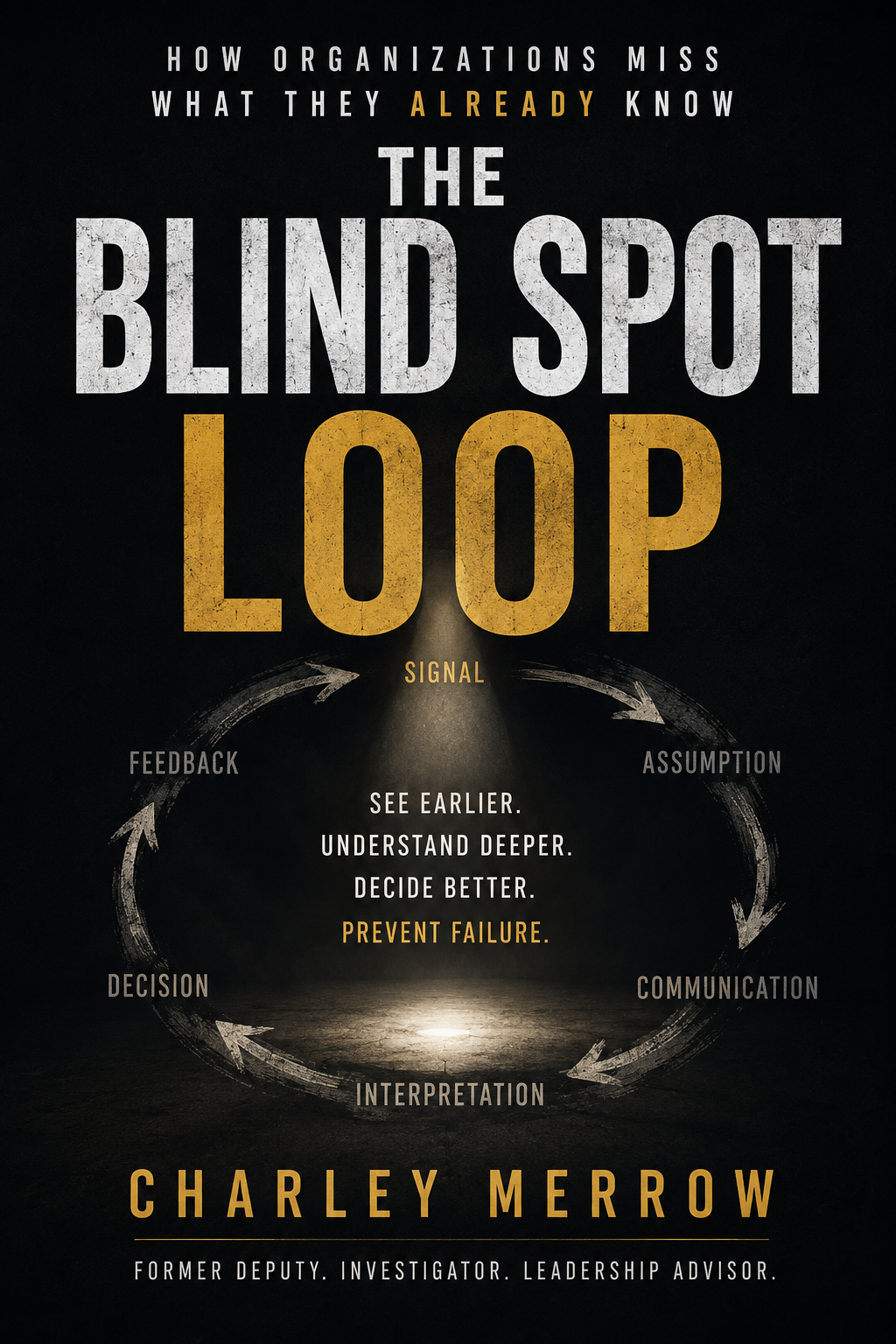
(Publication TBA) The Blind Spot Loop: How Organizations Miss What They Already Know
Why do smart people miss problems that were already visible? Why do organizations discover warning signs only after a crisis forces them to look?
The Blind Spot Loop explores the hidden patterns that allow organizations to hold the right information without truly seeing what it means. Drawing from frontline public safety experience, documented organizational failures, and research across industries, Charley Merrow examines how assumptions, missed signals, communication gaps, routine, and institutional habits can turn small warnings into major failures.
The book introduces the Blind Spot Loop, a practical framework for understanding how organizations see, interpret, decide, and learn. Rather than searching for someone to blame after something goes wrong, it asks a more useful question: What did we already know, and why didn't we see it?
Designed for leaders, supervisors, investigators, HR and compliance professionals, administrators, clinicians, educators, and anyone responsible for improving a system, The Blind Spot Loop provides a practical way to recognize organizational blind spots earlier, ask better questions, and build systems that learn before the next crisis.
Because the goal isn't to eliminate human error.
The goal is to see what matters soon enough to change what happens next.
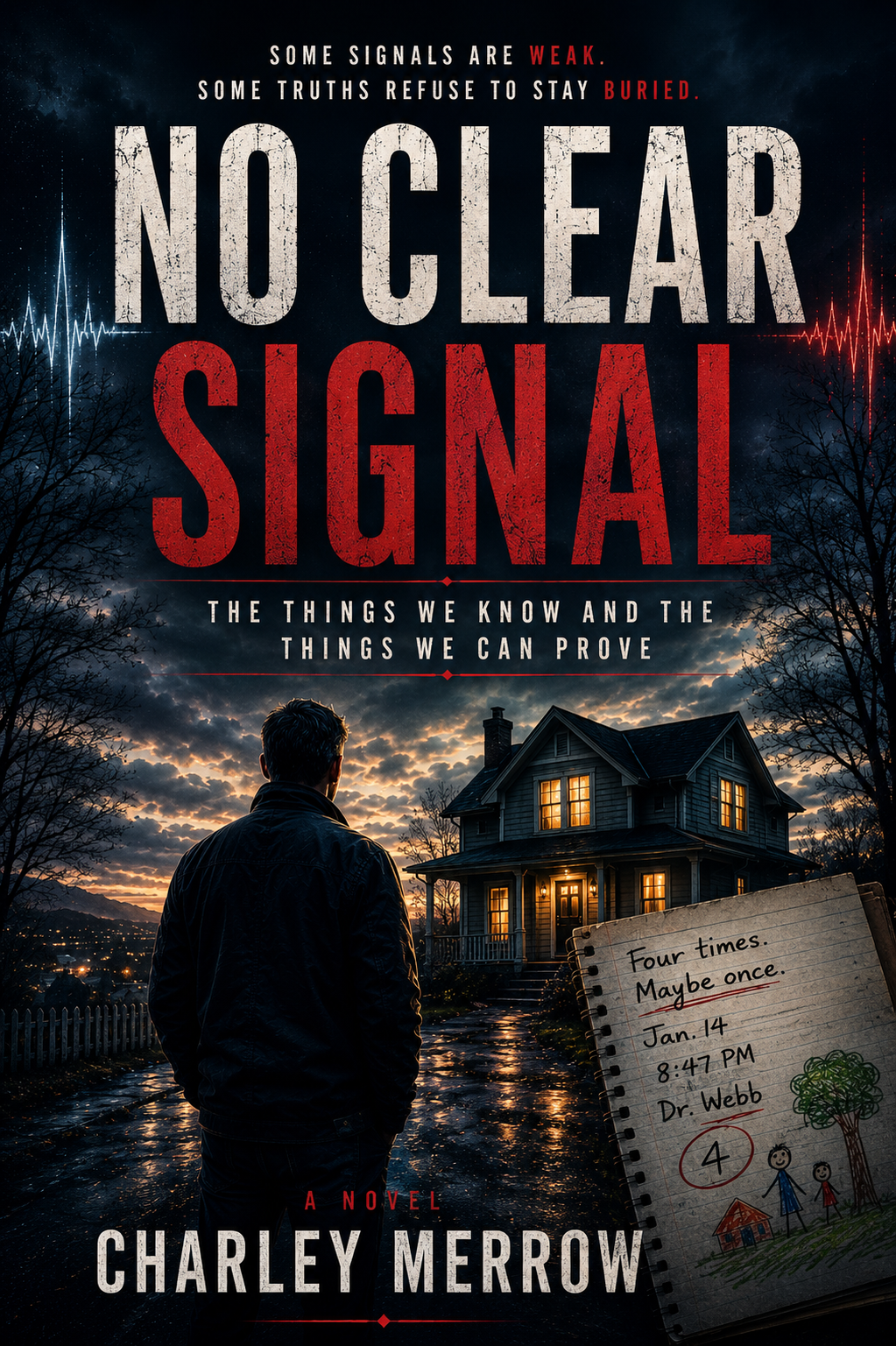
(Publication TBA) No Clear Signal
No Clear Signal is a novel about a father who begins documenting a disturbing pattern in his young son's medical care and finds himself caught between what he can see, what he can prove, and a system that does not want to believe it is being used to harm a child. As the evidence accumulates, he confronts medical child abuse, coercive control, family influence, and institutional blind spots that make the truth increasingly difficult to see.
Inspired by real-world patterns but entirely fictional, No Clear Signal explores how abuse can remain hidden when the person causing the harm is also the person the system trusts most, and what it takes to recognize a pattern when there is never a single, unmistakable signal.
Videos
Vigilant Frameworks
In this series, I take lessons from different parts of my career and explore what they can teach us about leadership, communication, organizational risk, and the systems we rely on every day. Each video looks at a different perspective and connects it to a larger question: how well do we recognize the patterns, warning signs, and gaps that can affect an organization before they become bigger problems?
Different experiences. Different environments. One common goal: seeing what others might miss.
Company
Vigilant Frameworks
See What Others Miss. Act Before It Becomes a Problem.
Vigilant Frameworks helps organizations identify the gaps, missed signals, and hidden patterns that can lead to operational failure, unnecessary risk, and poor decision-making.
Organizations rarely fail because information does not exist. More often, the problem is that critical information is fragmented, overlooked, misunderstood, poorly documented, or never connected to the larger picture.
Vigilant Frameworks was built to address that problem.
Drawing on real-world experience across law enforcement, corrections, human resources, education, compliance, and organizational operations, Vigilant Frameworks develops practical frameworks that help organizations recognize what is happening before the consequences become obvious.
Our approach focuses on the intersection of people, processes, information, documentation, decision-making, and organizational culture.
We help leaders ask better questions:
What information are we collecting but not using?
What signals are being missed?
Where are our processes creating blind spots?
What patterns are visible when information is connected?
Where does responsibility become unclear?
What happens when the right information reaches the wrong person, too late, or without context?
How can organizations move from reacting to problems to recognizing them earlier?
Our work is designed to turn those questions into practical action.
Our Philosophy
Awareness is not enough. Organizations need a framework for recognizing, connecting, and acting on what they see.
Vigilant Frameworks develops tools, methodologies, training, and intellectual property designed to help organizations strengthen situational awareness, improve decision-making, reduce organizational blind spots, and recognize signals that might otherwise be lost in the noise.
We believe the greatest risks are not always the ones organizations can see.
Sometimes, the greatest risk is what they do not recognize they are seeing.
What We Do
Vigilant Frameworks develops and applies practical frameworks for:
Organizational Blind Spots
Identifying gaps between what an organization knows, what it notices, and what it actually acts upon.
Signal Recognition
Helping organizations recognize weak, fragmented, or disconnected signals before they become larger problems.
Documentation & Information Management
Improving the quality, usefulness, and continuity of information that supports organizational decisions.
Operational Risk & Decision-Making
Examining how people, processes, systems, and organizational culture interact to create or prevent failure.
Training & Professional Development
Turning real-world lessons and proven frameworks into practical tools professionals can apply in their daily work.
Organizational Assessment
Examining where information, processes, responsibilities, and decision-making intersect to reveal vulnerabilities and opportunities for improvement.
Built From Experience. Designed for Application.
Vigilant Frameworks is not built around theory for theory's sake.
Our frameworks are grounded in real-world operational experience and designed to be used by the people who actually have to make decisions, manage risk, document events, lead teams, and respond when something goes wrong.
The goal is simple:
Help organizations see more clearly, recognize sooner, and act with greater confidence.
Vigilant Frameworks.
See What Others Miss.
Speaking Topics
-
The Blind Spot: What Are We Failing to See? Why organizations and individuals can have the information they need and still fail to recognize what it means. Drawing from public safety, healthcare, education, and organizational experience, Charley explores how assumptions and disconnected information create dangerous blind spots.
-
The Blind Spot Loop: How Organizations Miss What They Already Know A practical examination of how assumptions, missed signals, communication, interpretation, decisions, and feedback can create recurring organizational failures. This presentation introduces the Blind Spot Loop framework and gives leaders a way to recognize where their organization is in the cycle.
-
High-Accountability Leadership: Accountability is more than policies, discipline, and compliance. This presentation explores how leaders create environments where people understand the purpose behind the rules, challenge assumptions, communicate uncomfortable information, and take ownership before problems become crises.
-
When the System Fails the Person It's Supposed to Protect: What happens when the systems designed to protect people become part of the problem? Drawing from public safety, healthcare, child protection, and lived experience, Charley examines institutional blind spots, accountability, and the human consequences of systemic failure.
-
From Frontline to Framework: What can nine years in law enforcement teach leaders outside public safety? This presentation connects frontline experience with leadership, training, decision-making, process improvement, and organizational accountability.
-
Public Safety & Corrections | Leadership & Accountability | Organizational Blind Spots | Documentation & Decision-Making | Child Protection & Coercive Control | Medical Child Abuse | HR & Administrative Operations | Healthcare Administration | Training & Professional Development
-
Security, Safety & Organizational Risk: Exploring the relationship between human behavior, situational awareness, communication, organizational systems, and the prevention of avoidable failures.
Questions for the Media
- What inspired you to write The Protector's Blind Spot?
- Why did you choose fiction for No Clear Signal?
- What connects your three books?
- How did your personal experience eventually lead to The Blind Spot Loop?
- What do you hope readers take away from your books?
- What did nine years in law enforcement teach you about organizational blind spots?
- Why do organizations sometimes miss information they already possess?
- What is the Blind Spot Loop?
- What is medical child abuse, and why can it be so difficult to recognize?
- How does coercive control affect a family's ability to recognize what is happening?
- Why did you move from writing books into building frameworks and businesses?
- What is Vigilant Frameworks?
- How does human behavior affect the effectiveness of safety and security systems?
- What is the difference between having information and actually connecting it?